September is National Service Dog Month, which honors and raises awareness about the life-changing impact that service dogs can have on people with disabilities. Service dogs are individually trained to perform tasks for people with disabilities. The most well-known service dogs are guide dogs that support people who are blind or low vision to move safely in the community. Service dogs can also be trained to alert medical issues like seizures or insulin drop, retrieve medications or other items, apply deep pressure therapy for people with post-traumatic stress disorder or anxiety, pull wheelchairs or offer stability support, alert to noises, and other tasks.
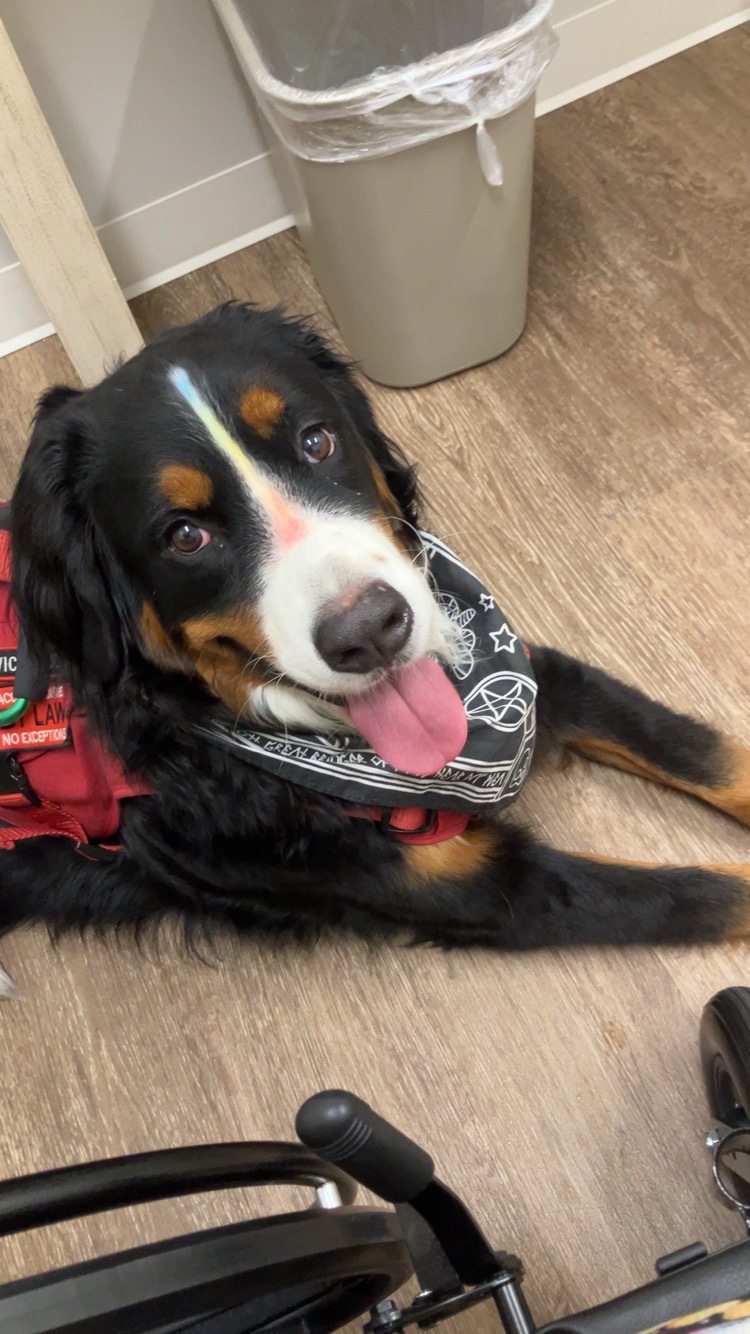
This is Xander, a Burmese mountain dog. He is a service dog in our neighborhood for a young adult with disabilities. He supports his person by pulling his person’s wheelchair, helping his person maintain their balance when standing, and providing deep pressure therapy.
While service dogs can be just as cute and cuddly as pet dogs, it is important to use proper etiquette when meeting a service dog and its handler:
- Do not distract the dog by petting or talking to the dog without permission. Remember that the dog is working, even if it may not have a tag or vest.
- Ask for permission to pet the dog and direct your questions and comments to the handler. Do not be offended if you are told no.
- If you are walking your own dog, keep your pet at a distance. Even a friendly pet may be a distraction and a potential interruption to a working process of the service dog team.
- Give the working service dog team the right-of-way to pass freely and ensure they have ample space to work.
- Educate yourself and others about service dogs.
The NIDILRR-funded ADA Network Knowledge Translation Center and the 10 regional ADA centers provide information and resources about service dogs and the Americans with Disabilities Act (ADA). For example:
To learn more about service dogs and your rights and responsibilities under the ADA, contact your regional ADA center by calling 800/949-4232. Contact NARIC’s information specialists to learn more about NIDILRR-funded research about service dogs and to learn more about service dogs and service-dog related organizations.
Photo credit: Corvid H.